Showing posts with label Busan. Show all posts

Thursday, December 22, 2011

Scare the Ghost Away: Patjugg on Winter Solstice

In honor of the Winter Solstice, Mom’s Busan friend drove us to a nearby temple for a bowl of patugg (red bean porridge) and dduck (rice cake). Koreans eat patjugg on winter solstice because it is believed to scare away the ghosts. It’s an ancient myth, but growing up, I remember watching a children’s cartoon about a ghost who freaked out whenever his human friend ate patjugg.
We had to drive up a very steep mountain to get to a small café by the temple. They served us some songpyun, a type of glutinous rice cake with sugary sesame seeds and chopped peanuts, as an appetizer. I personally like the rice cake better when the syrup is a bit more liquidy. The outside was a bit hard, but the sweetness wasn’t too overpowering.
The patjugg, made of steamed red bean porridge, rice, and glutinous rice ball, was served in a huge bowl. I tend to have a salty appetite, so I really wished I had a dash of salt to add to the porridge. The glutinous rice that was added to the water and the red bean paste mixture had thickened the porridge. I really enjoyed the first couple bites, but then realized the porridge was rather bland—I guess I had been hungry. My favorite was the glutinous rice ball, which was chewy and tasted like rice cake. I didn’t like the little rice bits because it just disappeared in my mouth without having to chew.
Outside the café, I saw some ladies swirling a giant pot of patjugg. I wonder how many people they will serve today.

Eat What You Want: Shinsegae Food Court

After a heavy lunch, Mom and I decided to get a quick dinner at a food court in the biggest department store in the world. The food at a food court usually decent at best and usually mediocre, but it is a great solution when you don’t exactly know what you want to eat and don’t want to try a random restaurant that could potentially be an epic fail.
We ordered a kabocha squash porridge to share. It had red beans, chopped carrots, and little pieces of glutinous rice. The porridge needed to have more substance—perhaps bigger chunks of the glutinous rice. It was a bit too sweet and tasted artificial without much squash flavor.
Mom ordered the vegetarian bibimbop. I prefer the bibimbop in a hot stone pot, but Mom doesn’t like the crackled rice at the bottom because it hurts her teeth. You can’t really go wrong with bibimbop, and this also tasted okay, but not spectacular. Besides, Mom makes great bibimbop for herself so I had no reason to fill my stomach with this.
I had the noodle in wild sesame broth. Like the porridge, I expected the broth to be thicker. I was surprised when I got the dish and the broth was too watery. Oh well. The noodle was chewy and it tasted great with kimchi for an added spice.

Gami: An Exquisite Japanese Course Meal

Neither my dad nor my brother enjoys or eats seafood, respectively. In our family, Mom is the only one who ever craves seafood, but recently she realized her stomach is slightly intolerant to raw fish because she often gets sick after eating sashimi. Since we were vacationing at a city by the sea, though, we couldn’t leave without eating some fish. I found out about a Japanese restaurant called “Gami,” a place recommended by different food blog, so we decided to check it out.
Unfortunately, because we didn’t make a reservation, the restaurant was full (can you believe it? On a weekday?) so we had to wait for about an hour. We remained optimistic, thinking, “If the place is pact at this time of the week, it must be delicious. It will be worth the wait!”
And it sure was. Mom told the sushi chef, “This is the best Japanese restaurant I have ever been to!” and I agree. We had the $22/person lunch course, which started with tomato salad in sweet wasabi sauce. The tangy dressing enhanced the taste of the otherwise bland tomato.
The waitress brought, clockwise from top left, seaweed soup, steamed eggs with oyster, and seafood porridge. The soup had a baby clam and some greens; it wasn’t anything too special. The steamed egg was soft and slimy at the same time—an odd combination of texture, indeed, but it still had an interesting taste. I am not sure if it was that wise to have the piece of oyster there because it added to the sliminess of the egg. I think a different texture, perhaps something crispy or hard, would have worked better. The porridge needed a bit more salt, so I just added a dollop of wasabi.
Because Mom and I sat in the bar, we got to see the sushi chef in action as he prepared our sashimi plate. He fired the mackerel, grilled the salmon, and sliced the tuna and three other fish whose names I do not recall. My favorite was the salmon in the middle. I could taste the fire from the grill on the outside, while the rawness inside melted in my tongue. So delicious! I also liked the fish on the bottom right, except the skin was way too scaly so I had to close my eyes while eating it. Overall, the sashimi was so fresh and chewy! Yum.
I dipped these sea urchins not in soy sauce with wasabi, but in cho-gochujang, or sweet Korean chili paste. I liked the orange stuff but too much would have upset my stomach because they were very slimy. The long, warm-like urchin was very chewy, while the spikey sea urchin at the bottom were too crunchy and jerky that I ended up spitting it out.
Another platter of sashimi. This is the same type of fish as the white fish served on the bigger sashimi plate, except the sushi chef told us that this filet is from a smaller fish with more bones. The black sesame seeds on top were a nice touch.
I have been craving good, fresh oysters and these satisfied my need. The oysters were marinated in light, lemon soy sauce with cucumbers, seaweed, and scallions. The sauce was too sour.
The salmon sushi was exquisite. Like the salmon on the sashimi plate, these were lightly grilled so I could taste the fire burning through the fish on the surface while the inside was moist, chewy, and sweet. A piece of perfection!
These pan-fried fish were full of eggs in their stomach. Even looking at them makes me feel nauseous. The eggs were also encapsulated in thin, sticky, and liquidy film. Absolutely disgusting, in my opinion. I feel sick even looking at it.
The yaki udon was another one of my favorite dish. It was a bit spicy from the pepper, and had ample amount of seafood (salmon, squid, mussels, oyster) and vegetables (cabbage, mushroom). The dried squid flakes on top added a nice smokey flavor.
I made a promise to myself to not eat fried food, but I had to break it this time because they served us fried kabocha squash! I took of the tempura skin, dabbed the squash in the napkin to get rid of any grease, and ate it. Oh my, no matter how good of a dish I am eating, squash trumps it all.
Nearing the end of the course meal, we had a huge bowl of fish cake soup. The soup was warm, a good change in the temperature of food from mostly raw and cold to cooked and hot. The fish cake tasted homemade, or at least not mass-produced.
Koreans don’t call it a complete without rice. The mini bibimbop had sprinkles of scallions and roe on top of the rice with a bed of kimchi underneath. Mom and I were satiated and extremely satisfied with the meal. I tend not to go to the same restaurant twice because I am always up for a new adventure, but I am willing to make an exception for this place.

Tuesday, December 20, 2011

Squash Festival at Hugsiru in Busan

Mom and I embarked on another mother-daughter vacation: this time to Busan, one of the main tourist cities located at the southern tip of Korea, for three days and two nights. We met one of Mom’s close friends for lunch, who picked us up from the bus station and took us to Hugsiru, a restaurant that I have been wanting to try since last summer but couldn’t because it was a bit out of the way from the hotel we were staying.
Hugsiru is a “well-being” restaurant, meaning it is health-conscious and serves food that has scientifically been proven to be beneficial to one’s health. Specifically, Hugsiru specializes in duck dish. However, the dish that I really wanted to try was the “Danhobak youngyangbop,” or glutinous rice with jujube, chestnut, pine seeds, and maple nuts cooked inside a whole kabocha pumpkin, my absolute favorite food ever. The dish was supposed to feed between 3~4 people and also came with 7~8 different banchans (little side dishes), so we decided to order that. We saved a little duck from dying!
The restaurant had a very “old” feel. We were put into a private room made with red mud brick.
Before we even made the order, the waiter brought us a bowl of boiled rice and glutinous rice cake. I was feeling a bit cold so I devoured two cups of warm boiled rice. I wished it had been a little warmer, though. The rice cake was not very chewy, again because it was really cold outside, and it was lathered with sesame oil on the surface, which I disliked.
After about 20 minutes of waiting, the waiter served us about 10 different banchans, including two different types of soup. I love that Korean food always look like a feast when captured in a camera!
I am a huge fan of vegetables. These are all the ingredients that would make a great bibimbop, but I also enjoy just eating them by themselves. My favorite of them all was the cabbage on the top because it had just the right texture for an otherwise mushy combination of vegetables. The squash, radish, seaweed, and that brown vegetables whose name I do not were also good, but needed a bit more salty, especially the squash.
The iceberg lettuce apparently doesn’t have much nutrients because it is just all water. The dressing was a combination of mayonnaise and some fruity sauce. For someone who likes her salad without any dressing, the sauce was too overpowering.
Japchae is one of traditional Korean food. It is made of clear noodles sautéed in garlic soy sauce with different vegetables, such as mushroom, spinach, onions, and carrots. The japchae was topped with sprinkles of sesame seeds. I personally don’t like clear noodles, so I only had a bitef of japchae. Nothing special.
There were three pan-fried fish for each person. Mom’s friend ate the entire thing, including the head! I was a bit appalled. The eyes creeped me out so I decided to pass on these little fellas.
These are kabocha squash Korean pancakes. At first I thought they were kimchi pancakes because of the color. I have never had jeon (Korean pancakes) made with squash, but I had two of these because they were delicious! I had to dab them with napkins to get rid of the grease and perhaps they were slightly too sweet, but overall a pretty interesting taste.
According to Mom’s friend, this dish is a specialty in Busan. It’s basically a sautéed bean sprouts, mushroom, carrots, and sea urchins mixed in creamy sesame sauce. I was amazed how it could taste so creamy without any added cream!
Last but not least, the highlight of the day’s meal: healthy glutinous rice cooked in kabocha squash. Each piece is one serving. I absolutely loved the chewy glutinous rice with different types of beans, huge chunks of chestnuts, pine and maple seeds, and black rice. I could also taste a hint of kabocha squash in the rice because it was cooked within. Speaking of which, the squash was cooked perfectly in the steamer. The fiber-filled inside was soft and sweet, and even the skin was soft enough for consumption. I literally ate the entire thing without any part thrown away.
This meal was what the Koreans would call “Daebak” (A HIT!).

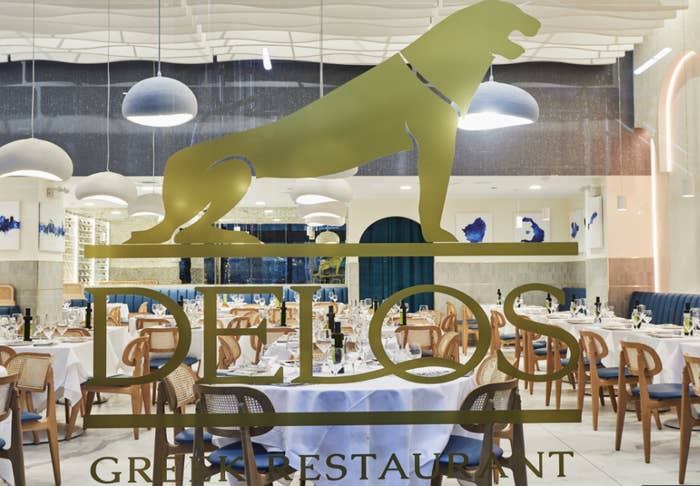
This Is What Peak Greek Food Looks Like In Midtown

 A full tour through pikilia, octopus, lamb chops, and one unforgettable moussaka at Delos Greek Restaurant in NYC Let me set the scene: Del...