Showing posts with label Japanese. Show all posts

Sunday, February 12, 2017

New Japanese Brasserie Roki Le Izakaya In NYC’s Flatiron Is A Must Spot For All Foodies

Experience the newest Japanese izakaya in NYC for some delicious bites.

Japanese Canape

Japanese Canape
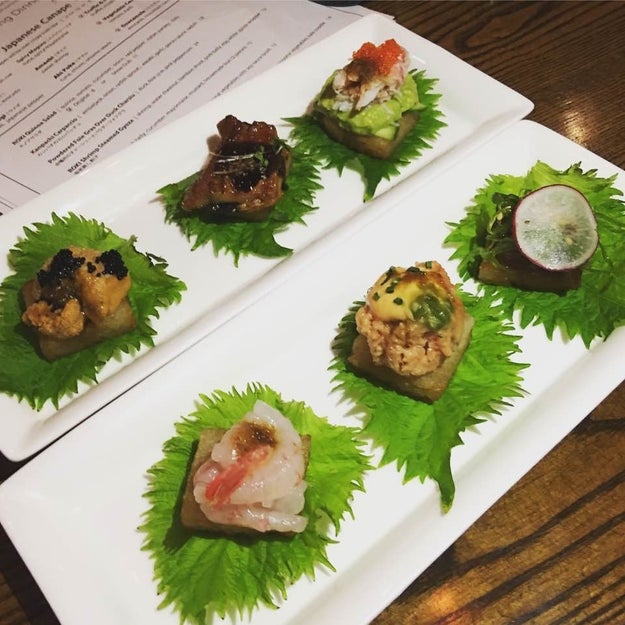
The perfect starter for your meal, the Japanese Canape at Roki Le Izakaya highlights a selection of fine ingredients like uni (sea urchin) topped with flying fish roe, kani (snow crab) with avocado, unagi (eel) with Japanese pepper, and spicy maguro (tuna) with mayonnaise all served over crispy sushi rice.

Kanpachi Carpaccio

Kanpachi Carpaccio
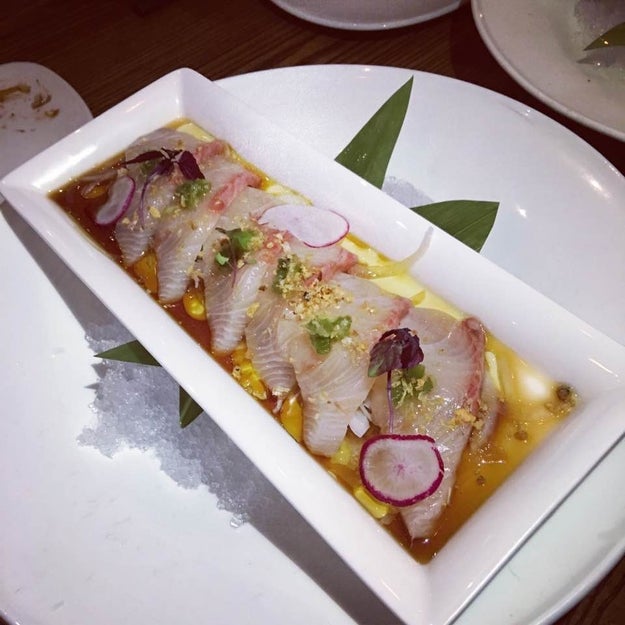
Fresh filet of raw amberjack is topped with crispy garlic chips and radish sprouts, and served over a bed of pickled onion and radish. The ponzu sauce with wasabi add a finishing touch to the dish.

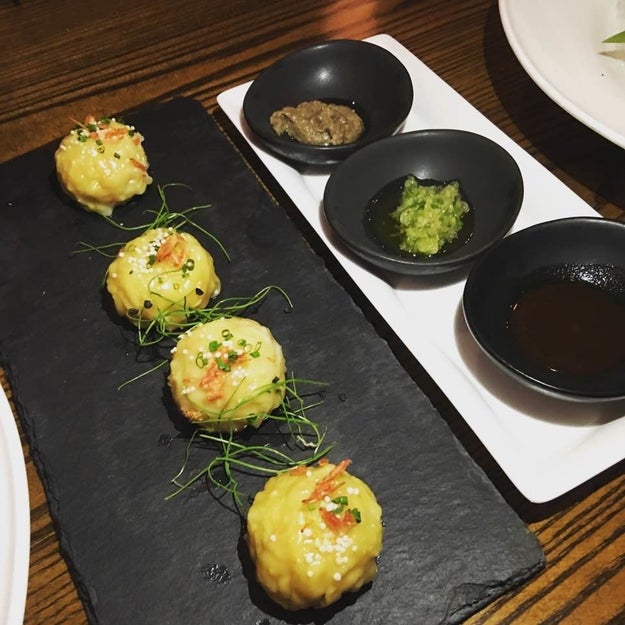
ROKI Shrimp Steamed Gyoza

ROKI Shrimp Steamed Gyoza
The plump steamed gyoza is stuffed with shrimp, water chestnut, bamboo shoot, pork belly, and egg white. The gyoza is served with three different types of dipping sauces, including truffle oil.

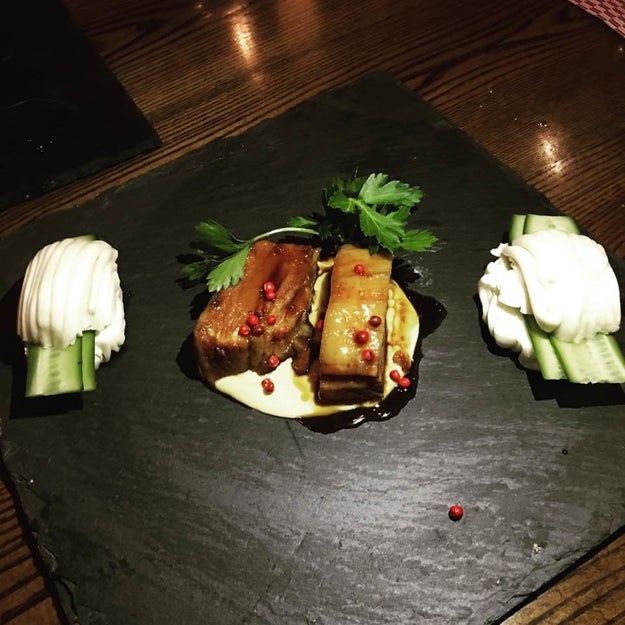
Pork Belly Bun

Pork Belly Bun
Two slabs of juicy, tender pork belly topped with pink peppercorn and cilantro is served with fluffy house-made buns with cucumber, mayonnaise, and mustard.

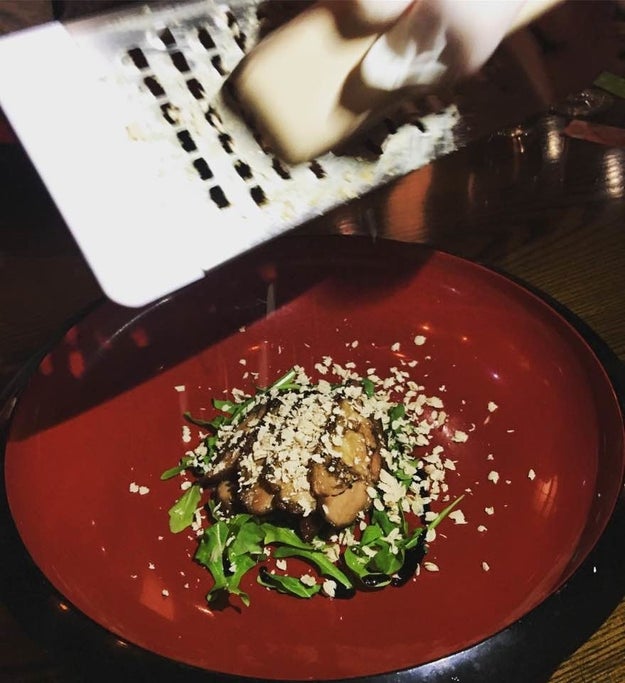
Powdered Foie Gras Over Duck Charsiu

Powdered Foie Gras Over Duck Charsiu
The perfect marriage between two of the finest ingredients, the Powdered Foie Gras Over Duck Charsiu features juicy duck charsiu topped with frozen, shaved foie gras that melts in your mouth. The duck is served over a bed of arugula.

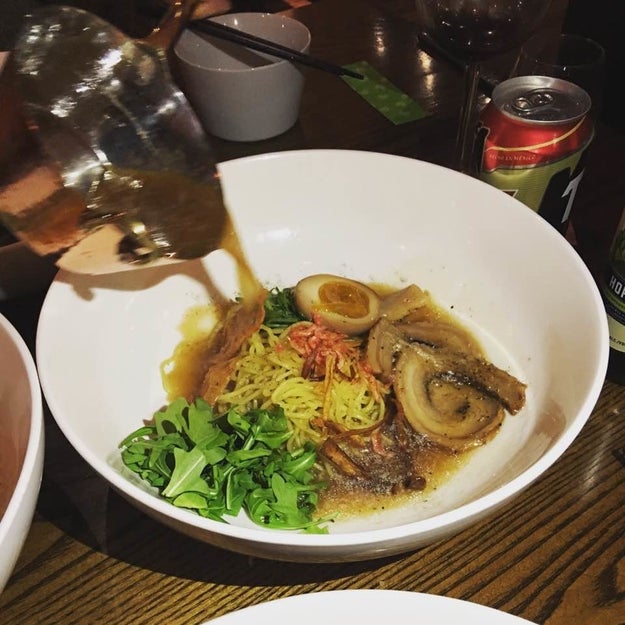
Classic Chashu Shoyu Ramen

Classic Chashu Shoyu Ramen
The traditional ramen features sliced pork belly, seasonal vegetables, arugula, and soft boiled egg with soy sauce broth

Organic Vegetable Ramen

Organic Vegetable Ramen
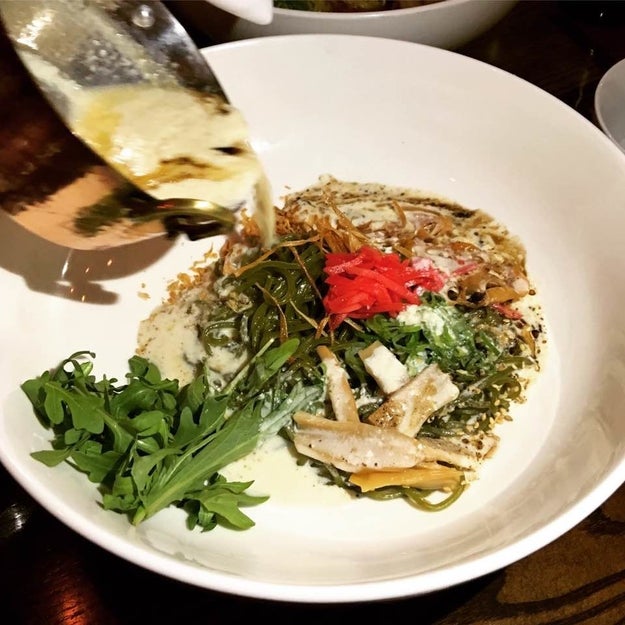
This vegan-friendly ramen is served in creamy soy milk broth with konbu, miso, sesame seeds, seasonal vegetables, and seaweed in green kale noodles.

Tuesday, July 26, 2016

Experiencing The Culture And Taste Of Japan At Sumo Stew

Sumo Stew party at the Brooklyn Brewery featured streaming of live sumo matches from Japan, as well as tasty bento boxes and soup.

New Yorkers had an opportunity to experience Japanese culture while enjoying delicious food and drinks at last week’s Sumo Stew. The event – inspired by the founder of The Brooklyn Kitchen’s journey through Japan – pairs live streaming of professional sumo matches with drinks and bites from Japan.
The event took place at the Brooklyn Brewery in the heart of Williamsburg. Upon checking in, each guest received a bento box curated by some of the top local chefs at restaurants like Ramen Burger, EN Japanese Brasserie, Yakitori by Neal, and The Crimson Sparrow. In addition, they received tokens in exchange for sake, shochu, tea, and of course draft beer from Brooklyn Brewery.
The bento box truly highlighted the unique variety of Japanese cuisine. It featured cold, refreshing ramen noodles perfect for the hot weather, sun-dried daikon and Japanese mushrooms in chilled dashi, tender grilled chicken thigh, and spicy pork belly with garlic, ginger, and scallion.
As though the bento box wasn’t fulfilling enough, the guests were treated to chankonabe, or hearty soup with mixed vegetables, noodles, and meat. This dish is also known as sumo stew because it is commonly eaten in large quantity by sumo wrestlers as part of a weight-gain diet.
There were plenty of ways to quench your thirsts as well. In addition to Japanese spirits like shochu, sake, and whisky, guests enjoyed Japanese green tea from Ito En and a selection of seasonal and year-round beer on tap from Brooklyn Brewery. A portion of the proceeds was also donated towards relief efforts helping those affected by the recent Kumamoto earthquakes in Japan. Doing good while having fun!

Monday, April 25, 2016

Best Place To Experience The Kaiseki Cuisine In NYC

Treat yourself to an exquisite, one-of-a-kind meal at Hakubai in NYC to experience the meticulously prepared Kaiseki cuisine.

Tucked away in the basement of The Kitano Hotel in New York City, Hakubai Restaurant is a cozy, intimate Japanese restaurant that specializes in Kaiseki cuisine. Kaiseki - a traditional multi-course dining experience - highlights delicate small Japanese dishes served on an array of porcelain, pottery, and lacquer dishware at carefully timed intervals. Indulge in the culinary ingenuity of Executive Chef Yukihiro Sato, who combines the best seasonal ingredients with a breathtaking presentation that will delight your eyes and palate.

First Course: Appetizers

Served on a wooden tray, the appetizer includes an assortment of small dishes like creamy, smooth tofu with nutty sesame flavor, tender duck breast topped with a dollop of mustard, deep-fried tilefish soaked in vinegar sauce with pickled radish, and lobster & asparagus with yolk sauce.

Second Course: Sashimi

The second course of assorted sashimi highlights the freshest fish of the day, such as the lightly seared fatty tuna, thinly sliced fluke, and plump scallop topped with salmon roe. These melt-in-your-mouth sashimi is garnished with grated radish, scallion, or petal-shaped radish.

Third course: Steak, Tempura, and Noodle

The third savory course is a dual play on warm and cold dishes. The perfectly cooked Miyazaki Wagyu steak flaunts tantalizing buttery flavor, while the deep-fried shrimp rolled with shiso and seaweed is no ordinary tempura. The green tea soba noodle salad topped with crunchy buckwheat adds a refreshing note to the palate.

Main Course: Sushi

The main course of premium assorted sushi is every sushi connoisseur’s dream. Imagine high quality, fresh sushi like toro, trout with shisho, ebi, seared whitefish, and eel blanketing perfectly seasoned sushi rice with wasabi.

Final Course: Dessert

The final dessert course features three treats – such as black sesame ice cream, earl grey sherbet, and green tea kuzu mocha – to end the experience on a sweet note.

Sunday, January 31, 2016

Atypical Brunch Experience at Yuzuki Japanese Eatery in SF's Misison District


Forget typical brunch items like pancakes and omelettes the next time you go out to eat. Yuzuki Japanese Eatery - an izakaya in the trendy Mission District that specializes in shareable, small Japanese plates - has revolutionized the way we conceive brunch when it launched brunch service last summer. While Yuzuki's limited brunch menu focuses on items like udon and soba instead of grilled skewers and rice pot, you will still indulge in the same delicious and authentic Japanese cuisine made with fresh, local, and seasonal ingredients.

Wagyu Udon ($23)


Yuzuki's simple brunch menu is categorized into noodles (udon or soba) and sushi. You get a choice between udon or soba with all noodle entrees, which also come with a side of vegetables and topping choices that range from chicken and egg to lightly fried shrimp and vegetables. I would recommend the Wagyu Udon ($23). Served in a bowl of warm, flavorful broth are a generous portion of soft, chewy udon noodles and six tender pieces of wagyu beef topped with scallions. 
Kaisen Chirashi ($28)


The Kaisen Chrashi ($28) has eight different varieties of fresh sashimi and seafood, such as tuna, mackerel, lump Dungeness crab meat, and salmon roe. The salmon has an extremely rich, buttery taste that just melts in your mouth, while the scallop provides the perfectly chewy, juicy, and plump texture. The Kaisen Chirashi also comes with a side of clear soup with mushroom and seaweed.

Saturday, January 30, 2016

Trust the Chef at Omakase in SF to Guide You Through an Exceptional Culinary Journey of Japanese Cuisine


Regardless of whether you are a local or a visitor in San Francisco, you will want to plan ahead to grab one of only 14 highly coveted seats at Omakase, the hottest Japanese restaurant in town. Just 7 months into operation (the restaurant opened in June 2015), Omakase has already garnered numerous accolades, including a 1-Michelin star and a 3 stars rating from the SF Chronicle.


The menu at Omakase is quite simple: you choose either the Hideaki Omakase ($150) or the Yamato Omakase ($200), whose difference in price is mainly due to the number of courses and the rarity of fish. For both options, you will be guided by the chef as he takes you on a unique journey that highlights the simple yet complex flavors of Japanese cuisine. I opted for the Hideaki Omakase, which included Hideaki Omakase, which included 2 appetizers, 1 sashimi, 10 pieces nigiri, and 1 owan. Some of the highlights include:

Ocean Trout with Vinegar


The lightly fried ocean trout was crispy on the outside and moist on the inside. I loved the contrast between the sharp vinegar and the sweet trout. The greens and halved tomatoes provided a nice variety of textures to the dish.

Maguro (Tuna) and Saba (King Mackerel)


This truly melt-in-your-mouth platter of sashimi featured tuna and king mackerel. Omakase sources most of its fish from the famous Tsukiji Market in Japan. 

Chawanmushi (Egg Custard)


Hiding underneath the sweet egg custard was a piece of steamed, savory mackerel. The grated ginger on top added a kick of spiciness to the custard.

Chutoro (Medium Fatty Tuna)


Slightly less fatty than toro, the chutoro was seared with a torcher right before being served to provide a smokey flavor. It looked and tasted like rare Wagyu beef...but only better.

Japanese Halibut


As though the light, delicate halibut wasn't delicious enough, the chef enhanced the flavor even further by topping it with creamy uni liver and roe.

 King Salmon


Perhaps the most familiar and well-known nigiri, the King Salmon at Omakase had a rich, buttery taste that lasted in my mouth until the final swallow.

Uni with Ebi


The creamy uni was topped with ebi and freshly grated wasabi for an interesting interplay of texture and flavor.

Lobster Miso Soup with Tofu

  
Whereas most Japanese restaurants would start a meal with miso soup, Omakase ended its savory course with lobster miso soup with chives and tofu. 
.
Mango Sorbet 


A combination of icy dessert and liquid, this dessert was a Japanese version of affogato or root beer float. Instead of ice cream, you get a scoop of mango sorbet topped with Yuzu. Instead of coffee or root beer, you get rice wine. Combine them together and you have a surprisingly delicious concoction and a refreshing way to end the omakase experience.


Because the nature of omakase is designed to highlight the freshest ingredient of the day, everyone's experience will be different and no single night will be the same - but one thing for sure is that you will certainly leave the restaurant extremely satisfied and wanting to return ASAP to experience the magic of Omakase again.


Monday, September 7, 2015

Delightful Japanese Dessert at Cha-An Teahouse in East Village

Of all the cute little Japanese/Asian-inspired dessert places in East Village (ChikaLicious, Spot, etc.), Cha-An is my favorite because of their presentation, interior (such a cute tea house decorated with wooden floors/tables/booths, bamboo room dividers, rice-paper shaded lamps, etc.), and - of course - taste!

Cha-An's chef Tomako Kato is actually trained in French pastry, having apprenticed at Bouley Bakery with Bill Yosses, the Obamas' White House pastry chef. She has worked at Russian Tea Room and Le Bernardin before opening her own restaurant in 2005.


Cha-An offers a savory menu, but specializes in afternoon tea and dessert. I visited Cha-An with a large group, and we ordered a bunch of desserts to share. The Green Tea Roll Cake came with a scoop of sake ice cream and sweet red beans, and topped with thin cookie. The green tea roll cake had plenty of smooth green tea cream inside with a thin layer of red beans, which helped to moisten the cake. I would have liked a bit more green tea flavor. I couldn't taste the sake in the ice cream at all, but maybe for the better :) 


An order of Homemade Mochi includes three pieces. You can mix & match different flavors like green tea, black sesame, and earl grey chocolate. We had two green tea and one black sesame, and these are served in the shape of a snowman - so adorable! 


The mochi is PACKED with ice cream inside. Usually the ratio between mochi and the ice cream is pretty high (as in a lot of mochi and very little ice cream), but it was the opposite at Cha-An. I would have almost liked a bit more chewy mochi. 


My favorite was the Black Sesame Creme Brulee. Served in a beautiful black ceramic cup, the soft creme brulee (with crackly top, of course), had an amazing black sesame flavor. The black sesame ice cream in the middle and the rolled-up black sesame wafer (studded with more black sesame) added to the intense flavor. 


The scoops of Jasmine and Green Tea Ice Cream was delicious as well, but given the variety of really unique desserts, there was nothing too special about these ice cream. Definitely skip and try other things!


Finally, the Deconstructed Strawberry Pie with sake ice cream (again...not much sake flavor) was beautifully presented. I didn't like the flaky layers of pie crust. They should have used fresh strawberries, not the ones drenched in sugar. 


This dessert was beautiful to the eyes, but not tasty to the mouth. Maybe I disliked it because it was the least Asian-inspired.

Cha-An Menu, Reviews, Photos, Location and Info - Zomato

Tuesday, September 18, 2012

New York City Dessert Extravaganza


No matter how full we are, women always leave extra room in their stomach for dessert. I don't have a huge sweet tooth except for my weakness for frozen yogurt. Luckily, there is an abundance of dessert cafe in New York City to satisfy my cravings. I stumbled upon a small Japanese bakery in Midtown East called Cafe Zaiya, where I purchased a swirl of Green Tea & Sesame soft-serve ice cream ($4.50).


The ice cream was a bit overpriced for the size, but I have absolutely no regret about getting this delicious treat. The sesame flavor was a bit overpowering that I couldn't taste the green tea flavor, but that was fine because I much preferred the sesame flavor anyways. The ice cream melted really quickly in the heat.


My friend and I went to an indoor market in Chelsea Market, where we found a booth that serves instant s'more. When you order one, they use the fire to melt the marshmallow and press them in between gingerbread-like graham crackers.


The s'mores were about the size of a small palm. There was a piece of dark chocolate underneath the marshmallow. The graham crackers were dusted with bits of sugar.


We walked around a bit and found these petite, alcohol-infused cupcakes. The cake itself didn't have any alcohol taste, but I could definitely taste some rum in the frosting. This chocolate cupcake with peanut butter brittle, I think, was the only non-alcohol cupcake. Just for the minors ;)


Both the blue and the yellow cupcakes had alcohol in them. I don't quite remember what they were made of, however.


I also bought a trio of desserts and brought it home for later. Clockwise from top are Red Velvet Cupcake from Sprinkles Cupcakes, Steamed Green Tea Bread from Cafe Zaiya, and Yakimochi also from Cafe Zaiya. The Yakimochi is baked glutinous rice stuffed with sweet red bean paste. The glutinous rice was chewy with slightly crunchy exterior, and I could definitely taste the sesames. The red bean filling wasn't too sweet.


Sprinkles Cupcake, the world's first cupcake bakery that opened its first store in Beverly Hills, prides in its handcrafted delicacies made from finest ingredients, "including sweet cream butter, bittersweet Belgian chocolate, pure Madagascar Bourbon vanilla, fresh bananas and carrots, real strawberries, and natural citrus zests.


The Red Velvet Cupcake I had was decorated with a piece of sugared clover leaf. This is its most popular cupcake made from Callebaut cocoa and red hue, and topped with rich cream cheese frosting. To be honest, I thought both the cake and the frosting was overly sweet. The cake was quite dense.


The Steamed Green Tea Bread with red bean fillings was really fluffy. Like the cupcake from Sprinkles, this bread was also dense and heavy.


Even though the top of the bread was moist, the bottom layer was dry. I would have liked the bread to have lighter, more "steamed" feel to it. The green tea flavor wasn't very strong at all.


The bread was filled with red bean paste like the yakimochi, but it wasn't as packed. Eating this whole bread could probably substitute as a meal, both in terms of calories as well as in satisfaction.


The final dessert is my own personal twist on an ice cream sundae. There are two scoops of Dreyer's fat free vanilla frozen yogurt, a handful of Honey Bunches of Oats with almond slices, and a drizzle of honey.


I had to eat this fast before the cereal got soggy. I didn't like the drizzle of honey because it didn't add much flavor. Besides, the ice cream itself was already sweet enough. I realized that ice cream is best in its purest form.
This Is What Peak Greek Food Looks Like In Midtown

 A full tour through pikilia, octopus, lamb chops, and one unforgettable moussaka at Delos Greek Restaurant in NYC Let me set the scene: Del...